U-M Generative AI Use Cases

The University of Michigan is harnessing the power of AI to drive innovation across research, teaching, and administrative operations. From streamlining workflows to enhancing learning experiences, U-M faculty, staff, and students are finding creative ways to integrate AI into their daily work. This collection of U-M AI Use Cases highlights real-world applications of the university’s AI tools, showcasing the impact and potential of AI across campus.

How are you using U-M AI tools? We want to hear from you! Help grow this collection by sharing your experience. Submit your use case using the GenAI Use Case Submission Form to showcase how AI is making a difference in your department.
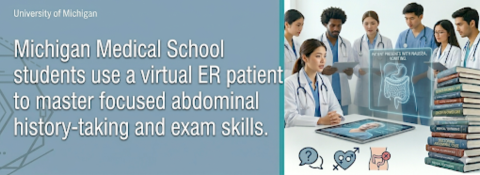

  • Medical school students need to practice interacting with patients to gather medical information and history as part of their studies. However, it is not possible for them to do all their practice with real patients.…

  • Medical school students need to practice interacting with patients to gather medical information and history as part of their studies. However, it is not possible for them to do all their practice with real patients.…

  • There are many engineering student teams operating at the University of Michigan. All of these have training materials, safety guidance, and other resources for their members. However, these resources are often difficult…

  • Logistics, Transportation & Parking (LTP) manages over 600 web pages of complex information, which often led to frequent, repetitive questions from users who struggled to quickly find what they needed, especially…

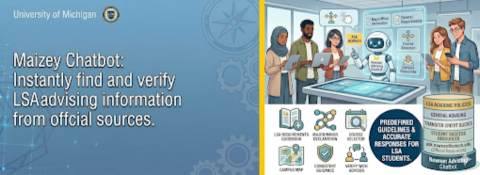
  • Students in LSA often have many questions about major and general requirements, courses, and campus resources. This information is scattered across multiple websites and sources and is often difficult for students to…

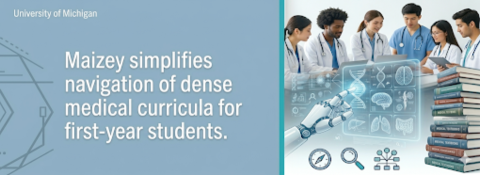
  • Year 1 of the University of Michigan Medical School curriculum, known as the “Scientific Trunk,” builds a strong foundation in biomedical science while integrating early clinical experiences through patient interactions…

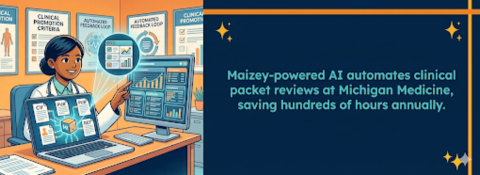
  • At Michigan Medicine, review teams traditionally expend a good deal of manual effort to review clinical promotion packets. These packets include CVs, publications, and supporting documents that must be evaluated against…

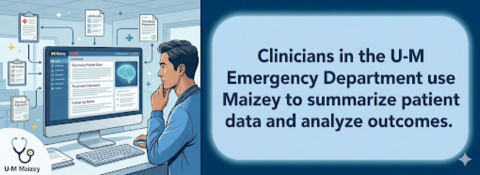
  • Clinicians in the University of Michigan Emergency Department collectively care for several hundred patients each day. They have access to patients’ medical records and can prescribe treatments based on that, but they…

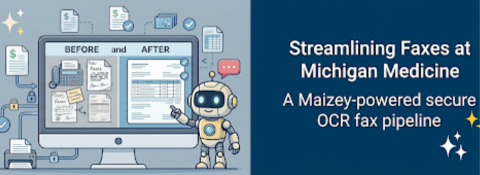
  • Staff at Michigan Medicine receive thousands of faxes every day, with contents ranging from outpatient referrals to patient records and test results to prescriptions. Low quality scans and handwritten documents can be…

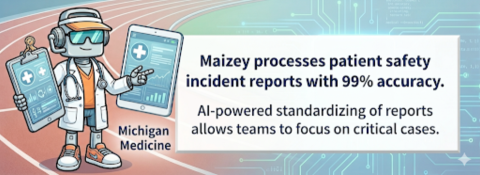
  • As a large hospital system, Michigan Medicine files a large number of patient safety incident reports, which are then reviewed by an internal team. This team frequently faces capacity constraints in performing these reviews due to…

  • At the University of Michigan, any users of the high performance computing cluster must access it through the Advanced Research Computing (ARC) department. These users often have questions about ARC and about high…

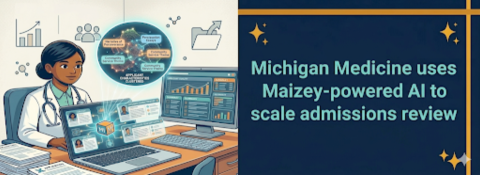
  • Every year, the University of Michigan Medical School receives approximately 12,000 applications. All of these applications must be reviewed to determine which students will be admitted to the program, but the team that…